


Welcome To 12° North
Chances Are Your Overland Build Isn't Keeping Up With You..

SET UTE trays and canopies are designed for the people who expect more from their trucks — more capability, more durability, and more purpose. Whether you’re hauling, exploring, or outfitting a full build, SET gives you the foundation to do it right.
What Matters
A Different Approach, Driven by Evolving Standards
SET doesn’t build catalog parts. We build systems — modular, adaptable, and engineered for the real world. Every tray and canopy is designed around strength, usability, and long-term reliability. No gimmicks. No shortcuts. Just gear that works when it matters.
Key Points (icons or small blocks):
-
Modular Design — Build it your way, upgrade anytime.
-
Real-World Engineering — Designed for work, tested for adventure.
-
Premium Materials — Aluminum construction, high-strength hardware.
-
Purpose-Built Options — Storage, boxes, water, power, accessories.

THE TRAY LINEUP
Every truck has a purpose. Every build has a direction. SET trays are designed to match yours — from simple work-ready flatbeds to full expedition platforms.
Base Tray — Ideal for those looking to have a full time canopy system, or flat bed camper! Includes the following standard features;
-
Base Deck
-
Fenders – up to 33” tires
-
Plug & Play Electrical
-
Exterior tie down rail
-
Optional Interior Tie Downs
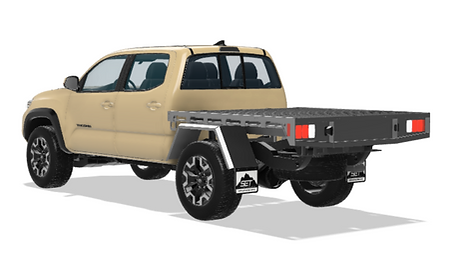
Contractor — The Contractor model is excellent for those looking to transport larger material, from lumber to furniture! Offering excellent cab protection. Includes all previous features from the Base 72. Additionally includes;
-
Bolt-on Headboard
-
Optional Interior Tie Downs
-
Optional Tire Carrier

Contractor Plus — The Contractor Plus will retain the ability to toss material or tools in the bed with its 10″ tall side gates. Side gates are easily removed in seconds, no tools required! Includes all previous features from the Contractor 72 and additionally;
-
Headboard
-
Side Gates
-
Optional Interior Tie Downs
-
Optional Tire Carrier

Adventurer — The Adventurer package is designed in mind for those taking their tools with them where ever they go! Whether that’s an ATV, or other job site necessities. The full-length storage box is lockable and great for storing ramps, fishing poles, or other long items! Includes all previous features from the Outlander 72. Additionally includes;
-
Static Underbody center rear storage box, up to 72″ long
-
Optional Interior Tie Downs
-
Optional Tire Carrier

Outlander — Looking for extra storage? The Outlander 72 offers excellent additional storage with it’s under body mounted tool boxes! These 32″ long boxes are angled for excellent departure angle. This package includes all the previous features from the Contractor Plus, and additionally;
-
Rear Underbody Tool Boxes – Pair
-
Optional Front & Rear box configuration for ACLB/CCLB/DCLB
-
Optional Interior Tie Downs
-
Optional Tire Carrier

Expedition — The Expedition package is the fully optioned system! Featuring all previous accessories, headboard, side gates, tool boxes, on board water tank and a sliding 36″ lockable drawer! Please note the drawer and water tank replace the static storage box!
-
Underbody center rear 36″ lockable drawer
-
Optional 48″ and 60″ drawer options (remove water tank).
-
Optional Interior Tie Downs
-
Optional Tire Carrier

CANOPIES
The Perfect Match for Your Tray
SET canopies are built to integrate seamlessly with any SET tray. Strong, secure, and ready for whatever you throw at them.
Highlights:
-
Full aluminum construction
-
Lockable storage
-
Modular interior layouts
-
Roof load capability
-
Electrical + water options

REAL BUILDS/GALLERY
See What’s Possible
A scrolling gallery of customer rigs, shop builds, and example setups. This is where people fall in love with the product.


WHY CHOOSE US
Built to Last. Backed by People Who Care.
These trays and canopies aren’t disposable, one‑piece systems. They are not manufactured in high production, low quality materials, for max profit from overseas sources. They’re built from modular, serviceable components — every panel, bracket, extrusion, and box is designed to be replaced, upgraded, or reconfigured without tearing the whole system apart.
SET builds trays and canopies that grow with you, adapt with you, and can be repaired when life's unexpected adventures happen too. It’s gear made for people who expect their equipment to last — and to keep working long after the cheap stuff has failed.
When you choose SET, you’re choosing hardware that works as hard as you do:
-
Modular Construction — Every component is bolted, not bonded. Damage a corner? Replace the corner. Need a new layout? Swap the parts, not the entire tray.
-
Upgradeable by Design — Add storage, change boxes, integrate water or power, or convert from work-ready to adventure-ready as your needs evolve.
-
Serviceable for Life — Panels, gates, mounts, and accessories are all individually replaceable. No “start over” moments.
-
Precision Materials — High‑grade aluminum, clean welds, and hardware chosen for strength, longevity, and real-world abuse.
-
Purpose-Built Engineering — Designed to handle load, vibration, weather, and the realities of trucks that actually get used.

Ready to Build Your Truck?
Whether you’re starting with a tray, adding a canopy, or planning a full system, we’re here to help you get it right.


Tech-Room Lounge
Iron & Instinct: The 4.0 Liters Of Truth
There’s a certain honesty to a 4.0L OHV that’s hard to explain to anyone who hasn’t lived with one. You pop the hood and it doesn’t try to impress you. It doesn’t posture. It doesn’t pretend to be something it isn’t. It just sits there, a cast‑iron block with German bones and American miles, wearing every heat cycle like a badge. Engines like this don’t hide their age. They don’t hide their stories. They show you everything if you’re willing to look.
And this one — this lived‑in, dust‑layered, coolant‑stained 4.0L Cologne V6 — is the perfect place to begin...
Steel vs. Aluminum UTE Trays: What Actually Matters
In the realm of cab-chassis builds, your tray isn’t just an accessory—it’s infrastructure. It dictates how your rig performs under pressure, how it responds to terrain, and how it reflects the intent behind the build. Whether you’re navigating job sites, hauling payloads across agricultural zones, or crafting a platform that mirrors your operational ethos, the choice between steel and aluminum trays is less about aesthetics and more about engineering.
This isn’t a debate for the undecided. It’s a breakdown for those who’ve already run the numbers, weighed the trade-offs, and are looking for clarity before committing. We’re not here to sell you a finish—we’re here to dissect the...

The Overlanding Hangover: Why The Market Feels Burnt Out-and What Comes Next
In 2020, overlanding was the golden child of pandemic-era escapism. With borders closed and flights grounded, Americans turned to the open road. Rooftop tents became status symbols. Instagram feeds filled with lifted Tacomas, solar setups, and fridge/freezer flexes. It was a movement—until it wasn’t.
Now, in late 2025, the overlanding market feels palpably different. Not dead. Not dying. But sobered—like a campfire crowd after the last beer’s been cracked and the stories have turned reflective. The adrenaline of the pandemic-era boom has faded, replaced by a quieter, more deliberate rhythm. The hype wave that once surged...

High-Output Alternators: Functions & Maintenance For Your Offroad Adventures
Most people understand what a regular alternator does, but a high‑output alternator plays in a completely different league—especially for overlanding, off‑grid travel, or any build running serious electrical gear. A stock alternator is designed for the average commuter: headlights, radio, HVAC, maybe a smaller audio system, your phone chargers.
A high‑output alternator is built for the adventurer who’s powering fridges, winches, air compressors, AUX lighting systems, radios for communications, NAVI tools, and those dual‑battery setups. Think of it as the difference between a household extension cord with a 3-way plug at the end and a dedicated generator. Both deliver electricity, but...


© 2017-2026 12° NORTH INDUSTRIES